
Planetary Wins in May 2026
Planetary Wins in May 2026 🌍

There is no shortage of difficult environmental news.
Many ecosystems remain under pressure. Climate risks continue to grow. Communities around the world are still navigating uncertainty, loss, and disruption.
And yet, alongside those realities, something else is also happening.
Across forests, rivers, cities, coastlines, communities, and policy spaces, people are restoring habitats, strengthening protections, advancing clean energy, and proving that meaningful change is possible when action is sustained over time.
This month’s stories are not about perfection.
They are reminders that recovery is still unfolding — often quietly, locally, and through thousands of people contributing in practical ways.
Here are some of the signals of progress that stood out in May 2026.
1. Nature Recovery Is Becoming More Visible
One of the strongest themes this month was the growing number of examples showing ecosystems responding positively when protection and restoration efforts are sustained.
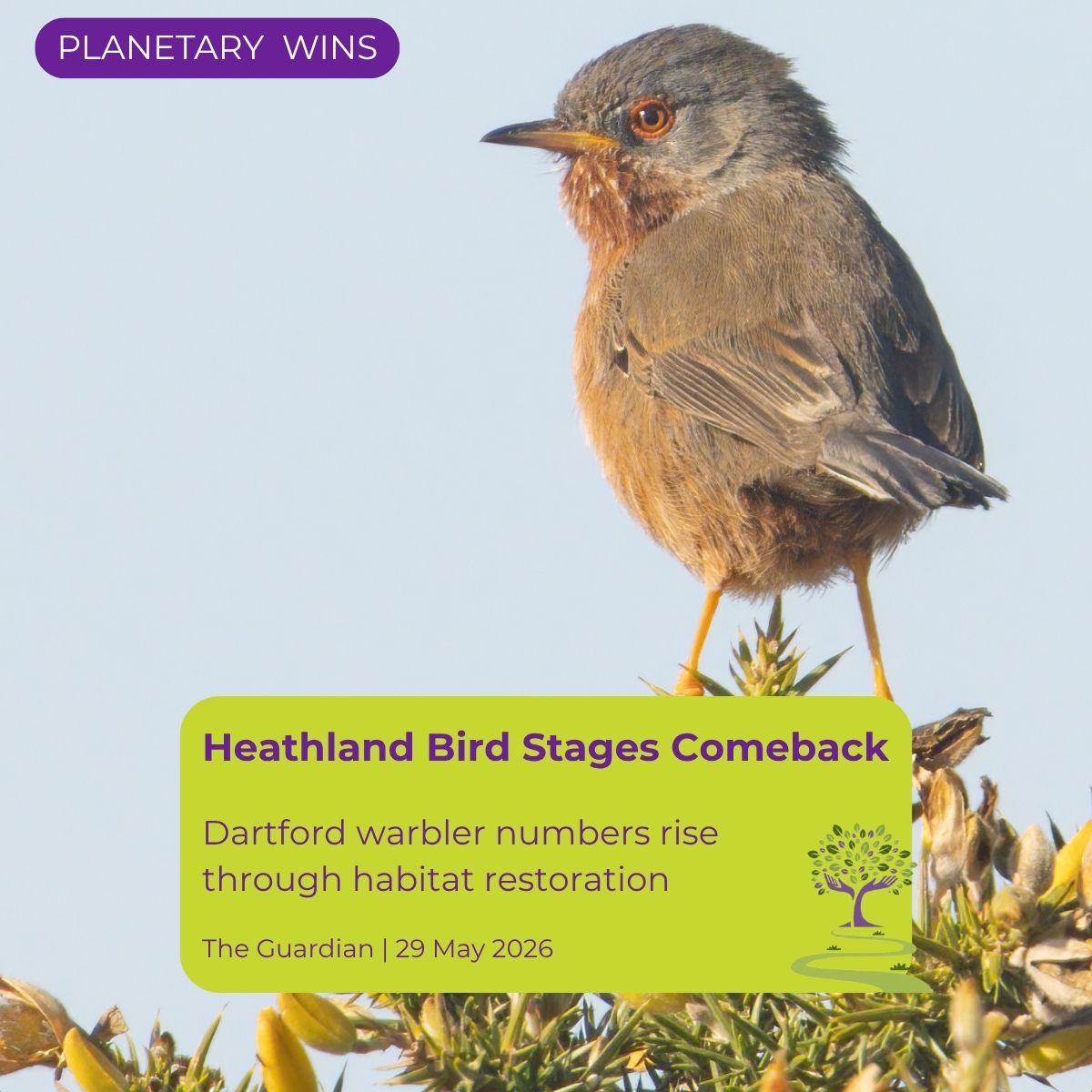
In England, conservation work on heathland habitats has helped the Dartford warbler make a remarkable comeback after coming close to extinction in the 1960s. Surveys recorded the highest number ever found on RSPB reserves, reflecting years of habitat restoration and landscape-scale conservation work.
Elsewhere in the UK, momentum is building behind efforts to restore rare temperate rainforests across Dartmoor. Commitments to expand rainforest habitat and support natural regeneration reflect a broader shift toward large-scale ecological restoration rather than simply protecting isolated fragments of nature.
Brazil’s Atlantic Forest also recorded its lowest deforestation levels since monitoring began in 1985, with forest loss falling by around 40% compared with the previous year. Environmental groups suggested that, if current trends continue, zero deforestation could become achievable within a few years.
Across these stories, the signal is clear:
Nature often responds when space, protection, and time are provided.
Recovery may not always be immediate, but it is possible.
2. Communities Are Becoming Central to Restoration
Another encouraging pattern this month was the growing role of communities in leading environmental recovery.
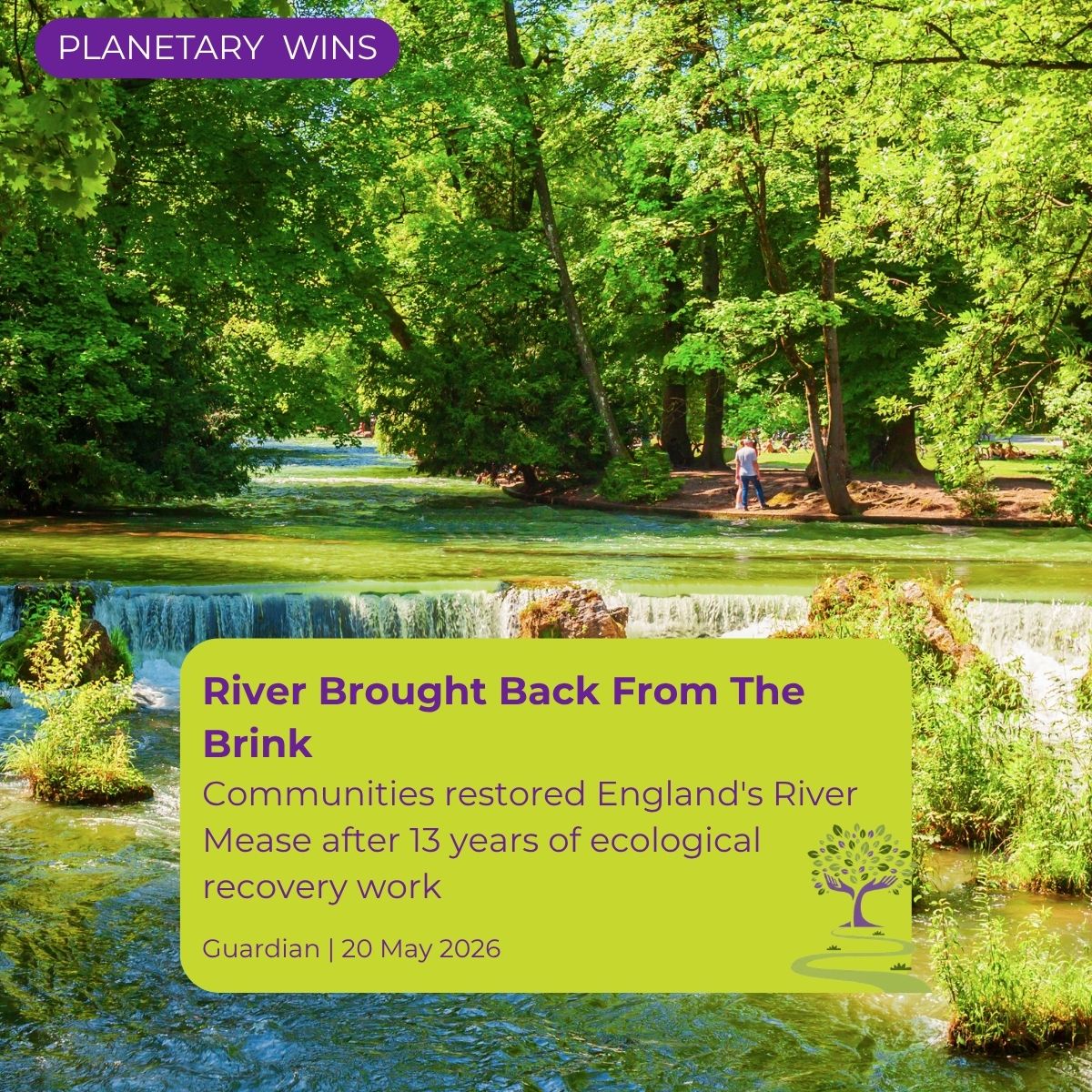
In England, the River Mease won the UK River Prize after more than a decade of collaborative restoration work involving farmers, conservation groups, volunteers, and public agencies. Wetlands have been restored, habitats recreated, pollution reduced, and wildlife has begun returning to previously degraded stretches of river.
The project highlights something increasingly visible across environmental work:
Long-term restoration often succeeds when it becomes a shared community effort rather than a top-down intervention.
A similar pattern can be seen in India, where conservationists Parveen Shaikh and Barkha Subba received international recognition through the 2026 Whitley Awards for their community-based work protecting endangered species and restoring habitats. Their projects demonstrate how local stewardship can become a powerful force for biodiversity recovery.
In Ireland, Natura Communities continues supporting locally led restoration initiatives that build ecological resilience while also creating employment, skills, and long-term stewardship within communities themselves.
Increasingly, environmental recovery is not only being done for communities.
It is being done with communities.
3. Clean Energy Continues Moving Into the Mainstream
While environmental conversations often focus on what still needs to change, May offered several reminders of how rapidly clean energy systems continue evolving.
Lithuania has emerged as one of Europe’s fastest-growing renewable energy success stories. Renewable electricity now accounts for roughly half of domestic consumption, compared with only 15% five years ago, following major investment in wind and solar infrastructure.
The UK also reported another strong year for rooftop solar adoption, with installations reaching record levels and continuing to expand access to locally generated clean energy.
Globally, reports this month highlighted a particularly symbolic milestone:
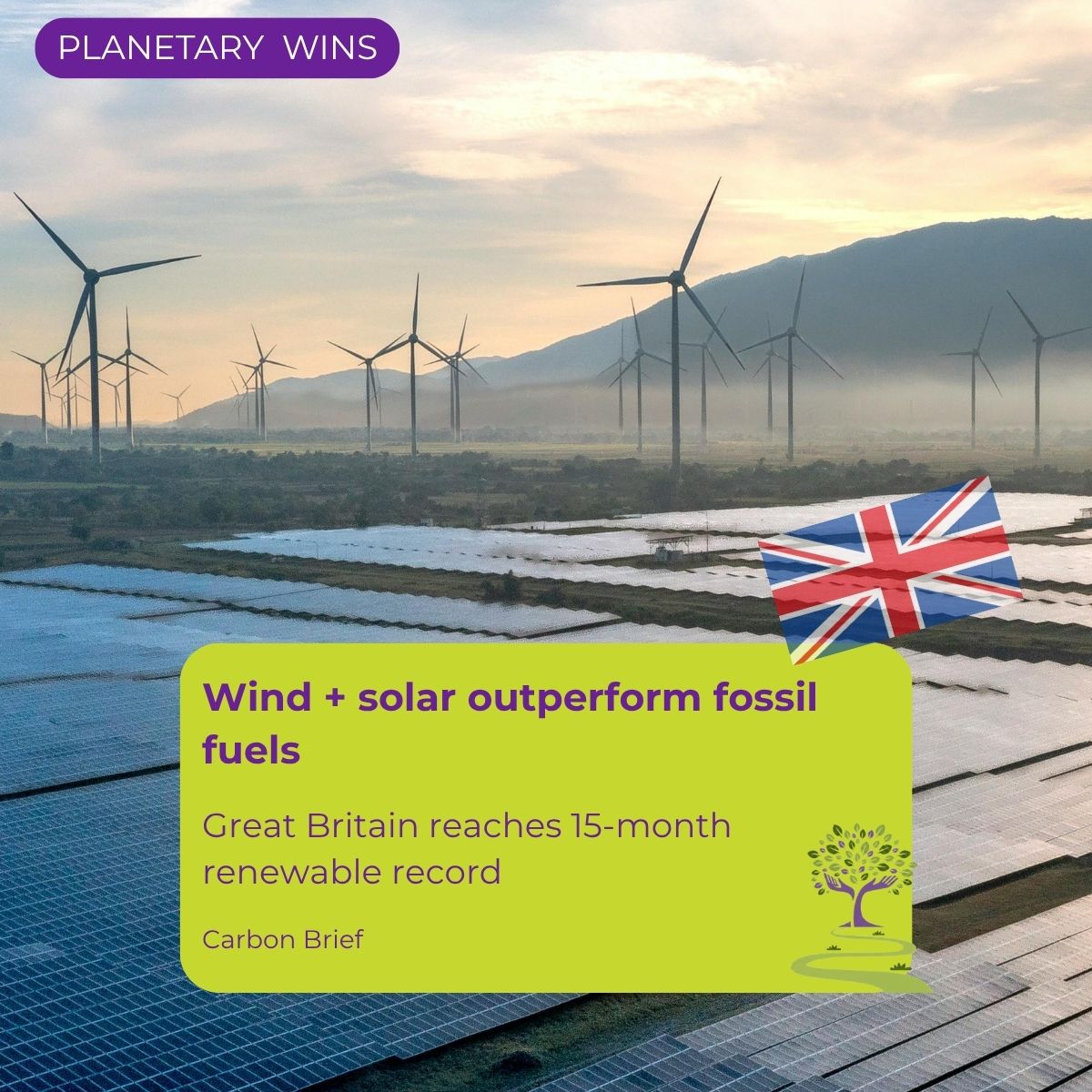
Solar and wind generated more electricity than gas worldwide during April 2026. While only one moment in a larger transition, it reflects the accelerating growth of renewable energy systems around the world.
The energy transition remains uneven.
But increasingly, clean energy is becoming not simply an environmental choice, but an economic and practical one as well.
4. Law and Policy Are Beginning to Catch Up
Environmental progress is not only occurring through restoration projects and technological innovation.
This month also brought important developments in environmental governance and legal accountability.
The United Nations General Assembly adopted a landmark resolution supporting the International Court of Justice’s advisory opinion on climate obligations. The resolution reinforces the principle that preventing environmental harm and reducing emissions are not simply political choices but legal responsibilities.
While legal frameworks alone do not create change, they can shape expectations, strengthen accountability, and provide support for future action.
At a more local level, cities and governments continue experimenting with policy approaches that align public systems with climate goals.
Amsterdam became the first capital city to ban public advertising for fossil fuel products and other high-emission activities, signalling how public policy is increasingly addressing cultural as well as technological dimensions of climate change.
Taken together, these developments suggest that environmental action is increasingly being embedded within institutions rather than relying solely on voluntary commitments.
5. Cities Are Becoming Places of Ecological Renewal
For many years, environmental recovery was often imagined as something happening far away from urban life.
That narrative is beginning to change.
In East London, plans advanced for a 14-mile urban nature corridor connecting parks, waterways, community spaces, rooftops, and green areas into a larger ecological network designed to support biodiversity and improve habitat connectivity.
Meanwhile, urban tree planting, mini-forest projects, and biodiversity initiatives continue expanding in cities around the world.
These efforts point toward an increasingly important idea:
Environmental restoration does not only belong in remote landscapes.
Cities can also become places of regeneration, biodiversity, cooling, connection, and ecological recovery.
As more people live in urban environments, this shift may become increasingly significant for both human wellbeing and ecological resilience.
6. Hope Is Emerging Through Relationship Rather Than Heroics
Perhaps the deepest pattern running through many of this month’s stories is that progress is rarely coming from one breakthrough alone.
Instead, it is emerging through relationships.
Relationships between communities and landscapes.
Between governments and legal frameworks.
Between farmers and conservationists.
Between technology and practical implementation.
Between people and the species they choose to protect.
Again and again, the stories that stood out this month were not primarily about dramatic rescue narratives.
They were about cooperation.
Patience.
Stewardship.
Long-term commitment.
And a growing recognition that meaningful environmental change often happens through sustained collective effort rather than individual heroics.
A Closing Reflection
When we are exposed to environmental news every day, it can sometimes feel as though progress is absent.
But many of the most important forms of progress are quiet.
A river becoming healthier.
A forest slowly returning.
A species recovering.
A law strengthening accountability.
A community deciding to care for a place together.
These changes rarely dominate headlines.
Yet over time, they help shape the future.
May 2026 offered many reminders that alongside the challenges, recovery continues to unfold in countless places around the world.
Not perfectly.
Not fast enough in every area.
But steadily.
And perhaps one of the most important practices we can cultivate is learning to notice these signals of progress without turning away from reality.
To stay informed without becoming overwhelmed.
To remain grounded enough to see both the challenges and the possibilities.
Because hope is not always found in certainty.
Sometimes it grows through witnessing what is already beginning to heal. 🌱
Sources: Environmental reporting and conservation updates from organisations and publications including RSPB, The Guardian, Euronews Green, Positive News, WWF, Ecologi, and other environmental reporting outlets throughout May 2026.
